
Ever caught your profile in a photo and wondered why your nose curves the way it does? Or maybe you’ve heard the term “hooked nose” thrown around and aren’t quite sure if it applies to you — or what it even means, exactly. You’re not alone. Nose shape is one of the most searched, most misunderstood facial features out there, tangled up in genetics, culture, and no shortage of internet myths.
This guide clears things up. Below, you’ll learn exactly what defines a hooked nose, what it looks like from the front and in side profile, what causes it, and how it truly differs from a Roman nose — the shape it’s most often confused with.
What Is a Hooked Nose?
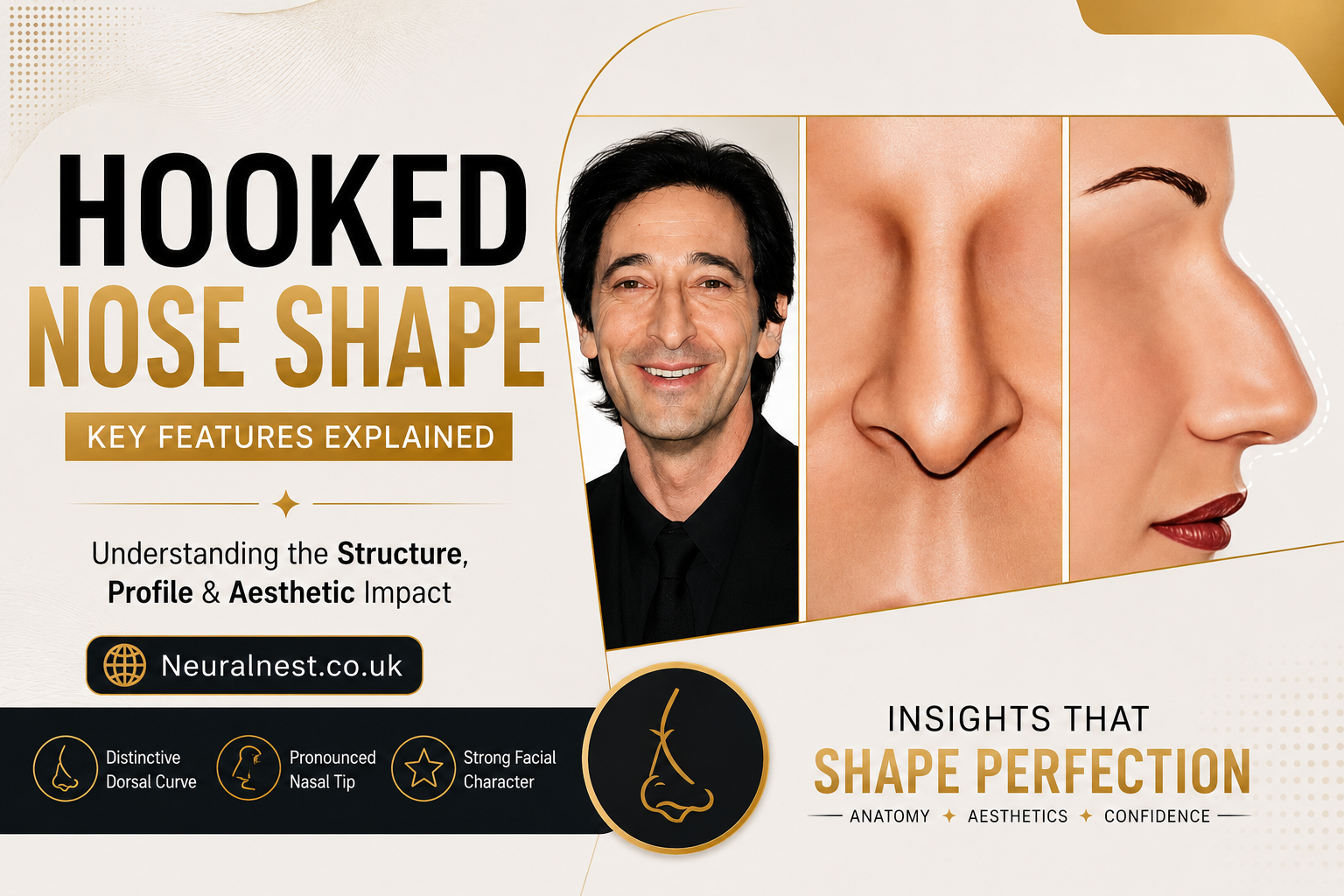
A hooked nose, sometimes called an aquiline nose, is a nose shape where the bridge curves downward toward the tip, creating a beak-like appearance in profile. The curve typically originates around the middle or upper third of the nasal bridge and slopes down, rather than staying straight or curving outward like a Roman nose.
This shape appears across every ethnic background and has no single “cause” — it’s simply one of several common nose shapes shaped by underlying bone and cartilage structure. & more blogs to see digital .
Hooked Nose Front View: What to Look For
From the front, a hooked nose can be harder to identify than from the side, but a few traits are common:
- A narrower bridge that may appear slightly asymmetrical
- A tip that points downward rather than sitting level or upturned
- Nostrils that can appear more visible or flared due to the downward tip angle
- A bridge width that’s often proportionate to the face, contrary to the myth that hooked noses always look “large”
From the front, a hooked nose typically shows a narrow bridge and a tip that angles downward, which can make the nostrils slightly more visible than in a straight or upturned nose shape.
Hooked Nose Side Profile: The Defining Curve
The side profile is where a hooked nose is easiest to identify. Key characteristics include:
- A convex curve along the bridge, starting roughly at the midpoint
- The nasal tip drooping below the nostril line
- A more pronounced dorsal hump in some cases, though not all hooked noses have one
- An overall silhouette often compared to a bird’s beak or hook shape
Why This Matters
Understanding your specific nose shape isn’t just cosmetic trivia — it’s genuinely useful information. It affects everything from how certain glasses frames sit on your face, to how makeup contouring techniques should be applied, to whether you’re a good candidate for specific rhinoplasty techniques if you’re ever considering one. Misidentifying your nose shape (confusing a hooked nose for a Roman nose, for example) can lead to styling choices or search results that don’t actually apply to you.
What Causes a Hooked Nose?
Genetics and Bone Structure
Nose shape is highly heritable. The angle of the nasal bones, the curvature of the septum, and the projection of the nasal spine are all passed down genetically, which is why hooked noses often run in families and appear more frequently in certain ethnic and regional populations, including parts of the Mediterranean, Middle East, South Asia, and among some Indigenous populations.
Cartilage Development
Beyond bone, the lower nasal cartilage plays a major role. Cartilage continues developing through adolescence, and how it settles — particularly the lower lateral cartilages that shape the tip — determines whether the nose ends up straight, upturned, or hooked.
Injury or Trauma
In some cases, a hooked appearance develops after a nasal fracture that heals with a downward curve, rather than from genetics alone. This is one reason a “new” hook shape appearing later in life, especially after an injury, is worth mentioning to a doctor if it affects breathing.
Hooked Nose vs. Roman Nose: What’s the Difference?
This is one of the most common points of confusion, and understandably so — both shapes involve a curve along the bridge. The difference comes down to where that curve sits and how the tip behaves.
A Roman nose (also called an aquiline nose in some classifications, which adds to the confusion) has a bridge that’s straight through most of its length with a slight bump or convexity higher up, near the top, while the tip typically stays level or points slightly upward.
A hooked nose curves more dramatically through the middle-to-lower bridge, with the tip drooping downward — closer to the nostrils — rather than staying level.
Comparison Table
| Feature | Hooked Nose | Roman Nose |
|---|---|---|
| Bridge curve location | Middle to lower bridge | Upper bridge |
| Tip direction | Points downward | Level or slightly upturned |
| Overall silhouette | Beak-like, pronounced hook | Straight with a subtle bump |
| Common association | Aquiline, “eagle” shape | Classical, “Roman statue” shape |
| Nostril visibility | Often more visible | Typically less visible |
A hooked nose curves downward through the middle-to-lower bridge with a drooping tip, while a Roman nose has a straighter bridge with a slight bump near the top and a tip that stays level or points up.
Common Nose Shapes Compared
| Nose Shape | Defining Trait |
|---|---|
| Hooked (Aquiline) | Downward curve, drooping tip |
| Roman | Straight bridge, slight upper bump |
| Straight | No curve, level bridge and tip |
| Button | Small, rounded tip |
| Upturned (Celestial) | Tip angles upward |
| Nubian | Wide base, straight or slightly curved bridge |
Pros and Cons of a Hooked Nose
| Pros | Cons |
|---|---|
| Considered striking and distinctive in many cultures | Can be a source of self-consciousness for some |
| Often associated with strong, classical facial structure | May be more prone to a visible dorsal hump |
| Historically linked to prominent historical and artistic figures | Certain glasses styles may not sit as securely |
| Highly individual — no two hooked noses look identical | Sometimes mistakenly stereotyped in media, which can affect self-image |
Expert Recommendations for Styling and Confidence
- Choose glasses with a saddle bridge or adjustable nose pads. These accommodate a downward-curving bridge better than fixed, low-bridge frames.
- Contour to balance, not hide. Makeup artists often recommend highlighting the bridge lightly rather than heavily shading the sides, which can overemphasize the curve.
- Consider your side profile in photos. Turning slightly rather than shooting a full hard profile can soften the appearance of any nose shape, including a hooked one.
- If considering rhinoplasty, consult a board-certified facial plastic surgeon. Hooked noses are commonly treated with dorsal hump reduction and tip rotation — but not everyone needs or wants correction, and that’s a valid choice too.
- Talk to a doctor if a hook shape appears suddenly after injury. This can sometimes indicate a septal deviation that also affects breathing, which is a medical — not just cosmetic — consideration.
Mistakes to Avoid When Judging Nose Shape
- Assuming all curved noses are “hooked” — many are actually Roman or simply have a dorsal bump
- Judging nose shape from a single bad-angle photo instead of natural profile and front views
- Believing nose shape reflects ethnicity in a strict, universal way — it doesn’t; hooked noses appear across virtually every population
- Assuming a hooked nose always needs “fixing” — it’s a normal anatomical variation, not a flaw
- Choosing glasses or contouring techniques based on generic advice rather than your specific bridge and tip shape
Conclusion
A hooked nose is one of the most common, most naturally occurring nose shapes in the world — defined by a downward curve through the bridge and a drooping tip, and easily distinguished from a Roman nose once you know what to look for in both front view and profile. Whether you’re identifying your own nose shape for styling purposes, comparing it to a Roman nose out of curiosity, or simply trying to understand the anatomy better, the differences come down to where the curve sits and how the tip behaves.
FAQs
What does a hooked nose look like?
A hooked nose has a bridge that curves downward, typically starting around the middle of the nose, with a tip that droops toward or below the nostril line — giving it a beak-like silhouette in profile.
What causes a hooked nose?
A hooked nose is most often caused by genetics, specifically the shape of the nasal bones and cartilage. It can also develop or become more pronounced after a nasal injury that heals with a downward curve.
Is a hooked nose the same as a Roman nose?
No. A hooked nose curves through the middle-to-lower bridge with a downward-pointing tip, while a Roman nose has a straighter bridge with a slight bump near the top and a level or upturned tip.
Can a hooked nose be fixed?
Yes, rhinoplasty can reduce or reshape a hooked nose, typically through dorsal hump reduction and tip rotation, but many people choose not to alter it since it’s a normal and common nose shape.
What ethnicities commonly have hooked noses?
Hooked or aquiline noses appear across many populations worldwide, including parts of the Mediterranean, Middle East, South Asia, Central Asia, and among some Indigenous groups — but the shape is not exclusive to, or universal within, any single ethnicity.
Is a hooked nose considered attractive?
Perceptions of attractiveness vary widely by culture and era. Hooked or aquiline noses have historically been associated with strong, classical features and have been considered striking rather than undesirable in many artistic and cultural traditions.
How do I know if my nose is hooked or just has a bump?
Look at your side profile: if the curve is concentrated in the upper bridge with a level tip, it’s likely a bump or Roman-style nose. If the curve extends further down the bridge and the tip droops, it’s more likely a hooked nose.
In Short
- A hooked nose curves downward through the middle-to-lower bridge, with a tip that droops toward the nostrils
- It’s most easily identified from a side profile, though front-view traits like nostril visibility can offer clues
- Genetics and cartilage development are the primary causes; injury can also produce or accentuate the shape
- A hooked nose is often confused with a Roman nose, which has a straighter bridge and a level or upturned tip
- The shape appears across many ethnicities worldwide and is a normal anatomical variation, not a flaw
- Glasses fit, contouring, and (if desired) rhinoplasty are the main practical considerations for those with this nose shape