
Search “cinnabar” and you’ll get four completely different answers: a mineral, an insect, a color, and a handful of pop-culture references. That’s confusing if you’re just trying to figure out what’s sitting in your jewelry box or crawling on your ragwort plant.
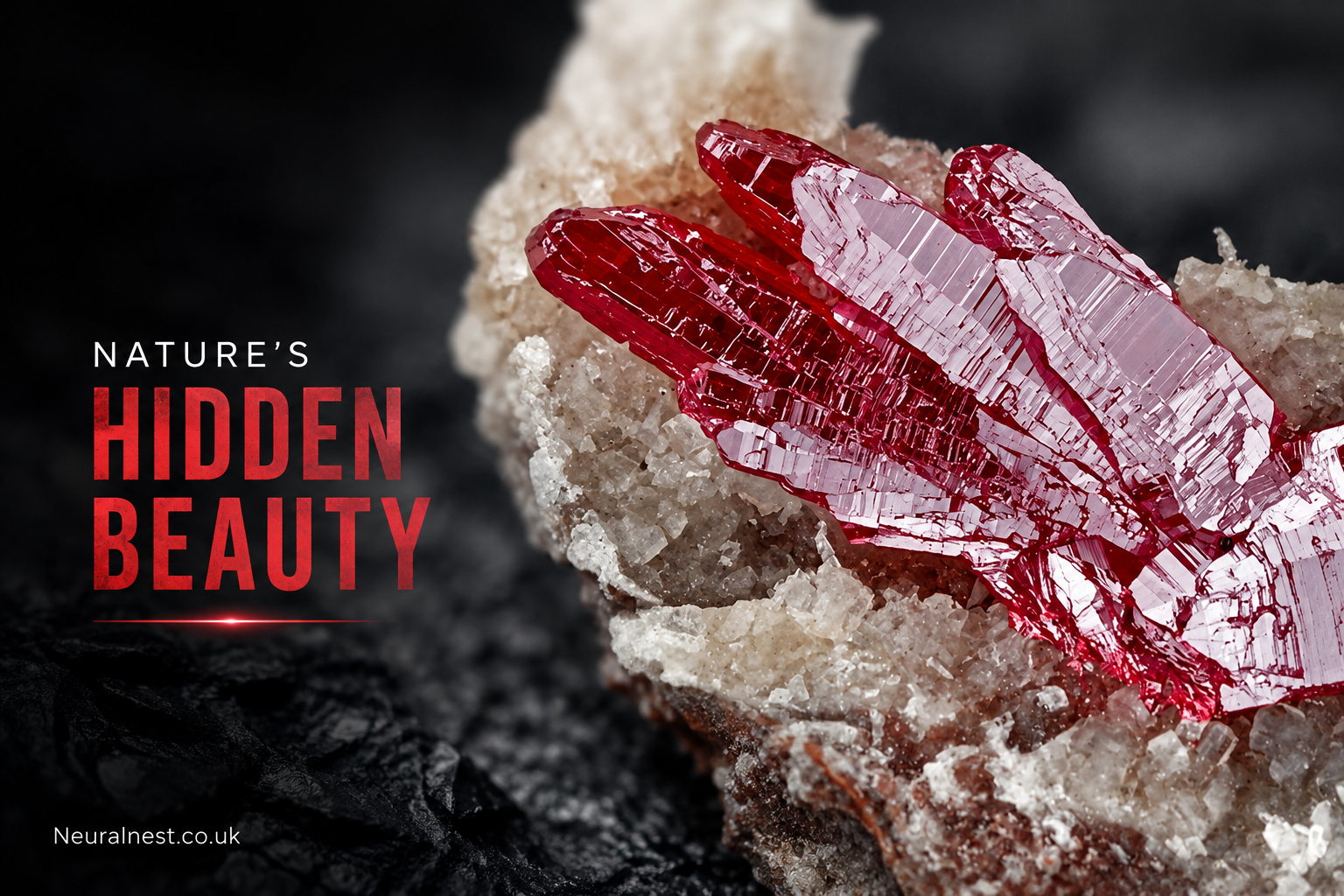
Here’s the short version: cinnabar is, first and foremost, a naturally occurring mercury sulfide mineral (HgS) known for its deep red-to-brick color. Everything else — the moth, the pigment, the fictional islands and film clubs — borrows its name from that mineral’s unmistakable hue.
By the end of this guide, you’ll know exactly which “cinnabar” you’re dealing with, whether it’s safe, and why it still matters to chemists, artists, gardeners, and collectors today.
The Chemical Makeup of Cinnabar
Cinnabar’s is composed of mercury and sulfur (HgS) and forms primarily around volcanic activity and hot springs. It’s the world’s most important ore of mercury and has been mined for that purpose for thousands of years.
Cinnabar’s typically appears as bright red crystals or granular masses. Its color intensity depends on crystal size — finer particles produce a brighter, more orange-red; coarser ones look duller and more purplish. & more blogs to see digital .
Where Cinnabar Is Found
Major deposits exist in China, Spain, the United States (California and Nevada), Mexico, Slovenia, Slovakia, Ukraine, Kyrgyzstan, and Egypt. Historically, the Almadén mine in Spain was one of the most productive cinnabar’s sources in the ancient world and supplied much of the mercury used across the Roman Empire.
Is Cinnabar Dangerous?
Yes — cinnabar’s contains mercury, and mercury is toxic with long-term or high-level exposure. Raw cinnabar ore, mercury vapor released during processing, and finely ground cinnabar’s dust all carry health risks, including a form of chronic mercury poisoning historically nicknamed “mad hatter disease.”
That said, risk depends heavily on form and exposure level:
- Raw/mined cinnabar: Highest risk, especially when crushed, heated, or inhaled as dust.
- Sealed decorative cinnabar (carved lacquerware, some jewelry): Lower risk if the mercury compound is bound and not being abraded, ingested, or heated.
- Traditional medicine use: Cinnabar has appeared in some historical and traditional remedies; health authorities generally advise against ingesting it due to mercury toxicity.
Cinnabar Jewelry: Safe or Risky?
Cinnabar’s jewelry (often deep red carved lacquer beads) is popular in Asian art and jewelry traditions. Worn occasionally as intact, sealed pieces, it’s generally considered low-risk for casual wear. The real concerns arise with:
- Cracked or deteriorating pieces that shed dust
- Children or pets who might chew on beads
- Prolonged skin contact with unsealed or raw material
- Any heating, burning, or grinding of the material
Expert tip: If a piece is old, chipped, or unverified, treat it as decorative-only — don’t wear it against bare skin for extended periods, and never burn or sand it.
The Cinnabar Moth: Nature’s Namesake
The cinnabar’s moth (Tyria jacobaeae) is a day-flying moth named directly for the mineral’s signature red. Its forewings are a sooty charcoal-black with two crimson stripes and spots, echoing the vivid red-black contrast associated with cinnabar ore.
How to Identify a Cinnabar Moth
- Wingspan of roughly 32–42 mm
- Black forewings with red streaks and spots
- Bright red hindwings, visible in flight
- Black-and-yellow banded caterpillars, often seen in groups on ragwort
Why Cinnabar Moths Are Bright Orange and Black
This is a textbook case of aposematism — warning coloration. Cinnabar’s moth caterpillars feed on ragwort and other toxic plants, absorbing alkaloids that make them poisonous to predators. The bold red-and-black (or yellow-and-black) pattern signals “don’t eat me” to birds and other predators, the same evolutionary strategy used by monarch butterflies and many wasps.
Cinnabar’s moths have also been intentionally introduced in parts of North America and New Zealand as a biological control agent against invasive ragwort, since their caterpillars can strip a plant of its leaves.
Cinnabar Color: A Pigment That Shaped Art History
Ground cinnabar produces vermilion, one of the oldest red pigments used by humans. Evidence of cinnabar-based pigment use dates back to roughly 8000–7000 BC at Çatalhöyük in modern-day Turkey, and cinnabar’s mining in Spain began around 5300 BC. In China, the Yangshao culture used cinnabar’s as early as 5000–4000 BC to paint ceramics, decorate walls and floors, and mark ritual ceremonies.
Mining cinnabar’s was historically difficult, expensive, and dangerous because of mercury’s toxicity, and the Roman-era Almadén mines were largely worked by condemned prisoners — a mining assignment that was close to a death sentence. Despite the danger, cinnabar red remained one of the most prized colors in painting, lacquerware, and ceremonial art for millennia.
Cinnabar vs. Vermilion vs. Modern Red Paint
| Feature | Natural Cinnabar Pigment | Synthetic Vermilion | Modern Cadmium/Organic Red |
|---|---|---|---|
| Source | Ground mineral (HgS) | Lab-synthesized mercuric sulfide | Cadmium compounds or organic dyes |
| Toxicity | High (mercury-based) | High (mercury-based) | Lower, but cadmium reds still require care |
| Historical use | Ancient China, Rome, Mesoamerica | Widespread from antiquity through the 19th century | Modern fine art, industrial paint |
| Color stability | Can darken with light exposure | Similar aging issues | Generally more lightfast |
| Availability today | Rare, mostly geological/collector specimens | Largely phased out | Common, regulated |
Pros of natural cinnabar’s pigment: unmatched historical authenticity, deep saturated red, cultural and ceremonial significance. Cons: toxic to produce and handle, prone to darkening, now largely replaced by safer alternatives.
Cinnabar in Movies, Games, and Pop Culture
There isn’t a major film franchise simply titled “Cinnabar,” but the name shows up frequently in pop culture precisely because it evokes something rare, red, and slightly dangerous:
- Cinnabar Island — a well-known location in the Pokémon video game series, home to a research lab and volcanic terrain.
- Cinnabar — a nonbinary character in the anime/manga Land of the Lustrous, named (like the other characters) after a real mineral.
- Independent film clubs and cinema brands have also adopted the name “Cinnabar,” drawing on its associations with warmth, depth, and intensity.
If you searched “cinnabar movies” expecting a specific blockbuster, the honest answer is that the term is more of a recurring naming motif across games, anime, and indie film culture than a single well-known title — a good reminder that not every trending keyword maps to one canonical answer.
Cinnabar Mineral vs. Cinnabar Moth vs. Cinnabar Color: Comparison Table
| Cinnabar (Mineral) | Cinnabar Moth | Cinnabar (Color) | |
|---|---|---|---|
| What it is | Mercury sulfide ore (HgS) | Tyria jacobaeae, a day-flying moth | A deep red-orange hue derived from the mineral |
| Found in | Volcanic/hot spring deposits worldwide | Europe, introduced elsewhere for ragwort control | Art, design, textiles, historical artifacts |
| Key risk | Mercury toxicity | None to humans; toxic to predators via diet | None (as a color name) |
| Claim to fame | Primary historical mercury ore | Warning coloration + biocontrol agent | One of history’s oldest red pigments |
Why This Matters
Understanding cinnabar’s isn’t just trivia — it connects chemistry, ecology, art history, and consumer safety in one word. If you’re buying antique jewelry, gardening near ragwort, studying pigment history, or just satisfying curiosity from a video game reference, knowing which “cinnabar” you mean helps you make safer, more informed decisions — whether that’s handling an heirloom carefully or correctly identifying a moth in your backyard.
Expert Recommendations
- Collectors: Store raw cinnabar’s specimens sealed and labeled; wash hands after handling, and never grind or heat them at home.
- Jewelry buyers: Ask sellers whether cinnabar pieces are lacquer-based (safer) or raw mineral-based, and inspect for cracks before wearing.
- Gardeners: Leave cinnabar moth caterpillars on ragwort if possible — they’re a natural, non-chemical control method for an invasive weed.
- Artists and historians: Use modern cadmium-free reds to replicate the cinnabar/vermilion look without the toxicity risk.
Common Mistakes to Avoid
- Assuming all “cinnabar’s” jewelry is inert — sealed lacquer and raw mineral are not the same risk category.
- Confusing the cinnabar’s moth with the monarch butterfly due to similar warning coloration.
- Burning or grinding cinnabar’s specimens for display purposes — this releases toxic mercury vapor.
- Searching for a “cinnabar movie” and assuming it’s a major franchise rather than a recurring cultural reference.
Conclusion
“Cinnabar’s” means something different depending on where you encountered it — but all four meanings trace back to one striking red mineral. It’s a mercury sulfide ore that shaped ancient art through the pigment vermilion, lent its name to a moth that wears the same warning-red colors as a defense against predators, and eventually became a naming shorthand across video games, anime, and indie film culture.
The practical takeaway is simple: cinnabar’s the mineral is genuinely toxic and deserves careful handling, cinnabar’s the moth is harmless to humans (and even helpful in gardens), and cinnabar’s the color remains one of art history’s most important reds — even though the pigment itself has largely been retired for safer alternatives.
If you came here trying to identify a moth in your yard, check a jewelry piece before wearing it, or just satisfy a curiosity from a game or search result, you now know exactly which “cinnabar’s” you’re dealing with — and how to treat it accordingly.
FAQs
Is cinnabar the same as mercury?
No. Cinnabar’s is the mineral ore (mercury sulfide, HgS) that mercury is extracted from — it’s a compound, not pure elemental mercury.
Can you touch cinnabar safely?
Brief, infrequent contact with intact, sealed cinnabar objects is generally low-risk. Avoid prolonged skin contact, dust exposure, or ingestion.
What does a cinnabar moth eat?
Cinnabar’s moth caterpillars primarily eat ragwort and related toxic plants, which makes the caterpillars unpalatable to predators.
Why is cinnabar red?
Cinnabar’s red color comes from its mercury sulfide crystal structure; particle size affects whether the hue leans bright orange-red or a duller purplish red.
Is cinnabar still used as a pigment today?
Rarely. Natural cinnabar’s pigment (vermilion) has largely been replaced by safer synthetic and cadmium-based reds due to mercury toxicity.
Where is Cinnabar Island from?
Cinnabar’s Island is a fictional location in the Pokémon Kanto region, not a real-world place.
In Shorts
- Cinnabar is primarily a mercury sulfide mineral — the main historical ore of mercury.
- It’s toxic in raw or dust form; sealed decorative items carry much lower risk.
- The cinnabar moth borrows the mineral’s name for its red-and-black warning coloration.
- Cinnabar-derived pigment (vermilion) is one of history’s oldest and most significant reds in art.
- “Cinnabar” in movies/games is mostly a cultural naming motif (Pokémon, anime) rather than one specific film.