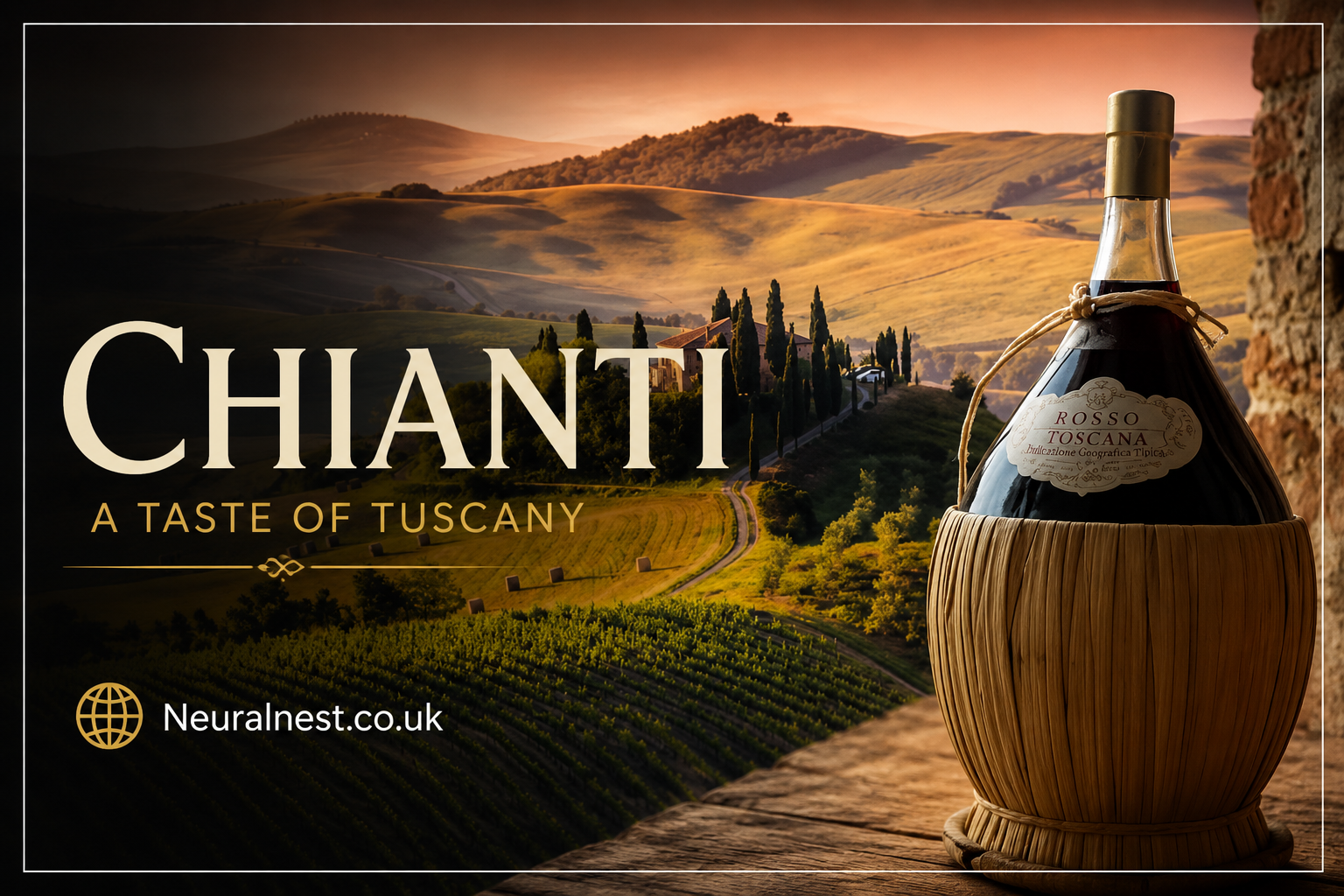

Standing in the wine aisle, staring at a dozen bottles labeled “Chianti,” you’ve probably wondered: which one is actually good, and what am I supposed to taste? Chianti has a reputation problem — decades of straw-basket bottles and gas-station versions taught American drinkers to underestimate it. That’s the pain point. The curiosity? Real Chianti, grown in hillside towns like Greve in Chianti, is one of the most food-friendly, character-driven red wines in the world. This guide promises to fix the confusion — explaining exactly what Chianti wine tastes like, where the best of it comes from, and whether a familiar name like Ruffino Chianti deserves a spot in your cart.
What Is Chianti Wine?
Chianti is a red wine made primarily from the Sangiovese grape, produced in the Chianti region of Tuscany, Italy. It’s not a grape variety or a brand — it’s a place, protected under Italian law (DOCG status, the country’s highest wine classification).
The Sangiovese Grape at Its Core
By law, Chianti must contain at least 70–80% Sangiovese, depending on the sub-zone. This grape brings the wine’s signature high acidity, moderate tannins, and notes of red cherry and dried herbs. Producers often blend in small amounts of Canaiolo, Colorino, or international varieties like Merlot for softness. & more blogs to see digital .
Chianti vs. Chianti Classico
This is one of the most searched comparisons, and for good reason:
- Chianti — the broader, larger zone; wines are lighter, fruitier, and more affordable.
- Chianti Classico — the original, historic heart of the region (marked by the black rooster, or Gallo Nero, seal); stricter rules, more structure, higher aging potential, and often higher price.
If you want everyday drinking, standard Chianti works well. If you want depth and complexity, look for Chianti Classico or Chianti Classico Riserva.
What Does Chianti Wine Taste Like?
Chianti wine tastes like tart red cherry, dried herbs, and earthy tomato leaf, layered with bright acidity, medium tannins, and a savory, slightly rustic finish. It’s rarely jammy or heavy — think of it as the anti-fruit-bomb red.
Flavor Profile Breakdown
| Element | Typical Notes |
|---|---|
| Fruit | Sour cherry, red plum, cranberry |
| Herbal/Earthy | Dried oregano, tobacco leaf, forest floor |
| Spice | Black pepper, clove (especially with oak aging) |
| Acidity | High — this is Chianti’s signature trait |
| Tannin | Medium, grippy but not harsh |
| Finish | Savory, slightly bitter (like espresso or dark chocolate) |
How Aging Changes the Taste
- Young Chianti (unoaked or lightly oaked): bright cherry, floral, best served slightly chilled (60–65°F).
- Riserva (aged minimum 24+ months): deeper dried-fruit and leather notes, smoother tannins, more complexity.
Greve in Chianti: The Region Behind the Wine
Greve in Chianti is a small town roughly 20 miles south of Florence and widely considered the unofficial capital of the Chianti Classico zone. Its central piazza hosts one of Tuscany’s most famous wine fairs, and the surrounding hillsides are covered in Sangiovese vines.
Why Greve Matters to Wine Lovers
Wines labeled from this sub-zone tend to show riper fruit and slightly softer tannins than wines from the cooler, higher-altitude areas further north, like Radda or Gaiole. If a bottle mentions Greve on the label or back story, expect approachable, well-balanced Chianti Classico.
Visiting Greve in Chianti
For travelers, Greve is a practical home base: walkable town center, weekly market, and easy access to family-run wineries offering tastings. Many US visitors combine a Greve stop with day trips to Siena and Florence.
Ruffino Chianti: A Closer Look
Ruffino’s History
Founded in 1877, Ruffino is one of the most recognized Chianti producers exported to the United States. Its wide distribution means it’s often the first “real” Chianti many Americans try.
Ruffino Chianti Taste & Value
Ruffino’s entry-level Chianti (often labeled simply “Ruffino Chianti” or “Chianti DOCG”) is medium-bodied with red cherry, light spice, and soft tannins — approachable rather than intense. Their Riserva Ducale line, by contrast, offers more structure, dried fruit, and oak-driven spice, closer to what serious Chianti lovers expect.
Ruffino’s base Chianti is a solid, affordable, food-friendly everyday wine. For a deeper, more authentic Chianti Classico experience, step up to their Riserva Ducale or explore smaller estate producers.
Chianti Buying Guide — Pros & Cons
Pros:
- High acidity makes it excellent with food
- Wide price range — good options from $12 to $80+
- Ages well (Riserva and Gran Selezione tiers)
- Versatile with tomato-based, herbed, and grilled dishes
Cons:
- Quality varies widely between producers
- Base-level Chianti can taste thin if mishandled or over-cropped
- Can be confused with lesser “Chianti-style” imitations outside the DOCG zone
Chianti Comparison Table
| Type | Aging | Typical Taste | Price Range |
|---|---|---|---|
| Chianti DOCG | Minimal | Light, fruity, high acid | $10–$18 |
| Chianti Classico | 12+ months | Structured, cherry, herbal | $18–$35 |
| Chianti Classico Riserva | 24+ months | Deeper, spiced, savory | $25–$50 |
| Chianti Classico Gran Selezione | 30+ months | Complex, dried fruit, long finish | $40–$100+ |
Mistakes to Avoid When Buying or Serving Chianti
- Serving it too warm. Chianti’s acidity shows better slightly cool (60–65°F), not room temperature.
- Judging all Chianti by one cheap bottle. Quality tiers matter enormously in this region.
- Ignoring the Gallo Nero seal. It’s the quickest way to confirm authentic Chianti Classico.
- Pairing it with delicate dishes. Chianti’s acidity can overwhelm mild, cream-based food.
Why This Matters
Understanding what you’re buying — and why a $14 Chianti tastes different from a $45 Chianti Classico Riserva — saves money and prevents disappointment. It also means you can confidently order Chianti at restaurants, pair it correctly with dinner, and recognize genuine quality instead of relying on label familiarity alone.
Expert Recommendations
- New to Chianti? Start with a basic Chianti DOCG or Ruffino’s entry-level bottle to learn the profile before spending more.
- Want something special? Choose a Chianti Classico Gran Selezione from a single estate near Greve in Chianti.
- Hosting dinner? Decant young Chianti for 20–30 minutes to soften sharp acidity.
- Buying as a gift? Riserva-level bottles feel more premium without reaching Super Tuscan prices.
Food Pairings for Chianti Wine
Chianti’s high acidity and savory notes make it ideal with:
- Tomato-based pasta and pizza
- Grilled or roasted meats (especially pork and lamb)
- Aged cheeses like Parmigiano-Reggiano or Pecorino
- Mushroom and herb-forward dishes
Conclusion
Chianti isn’t just another red wine on the shelf — it’s a snapshot of Tuscany itself, shaped by Sangiovese grapes, centuries of tradition, and towns like Greve in Chianti that still define what “authentic” means in this region. Once you understand what Chianti wine tastes like — tart cherry, dried herbs, high acidity, that signature savory finish — you’ll never grab a bottle blindly again. And whether you start with an easygoing Ruffino Chianti or work your way up to a Gran Selezione, you now know exactly what separates a forgettable pour from a genuinely great one.
FAQs
What does Chianti wine taste like?
Chianti tastes primarily of tart red cherry and dried herbs, with high acidity, medium tannins, and a savory finish — not sweet or heavy.
Is Chianti a dry or sweet wine?
Chianti is a dry red wine with no residual sweetness.
Is Ruffino Chianti a good wine?
Yes, Ruffino’s entry-level Chianti is a reliable, affordable, food-friendly option; its Riserva Ducale line offers more depth for those wanting a fuller experience.
What’s the difference between Chianti and Chianti Classico?
Chianti Classico comes from the original, historic core of the region under stricter rules, generally producing more structured, higher-quality wine than standard Chianti.
Why is Greve in Chianti important?
Greve in Chianti is considered the unofficial capital of the Chianti Classico zone and a hub for wine tastings, festivals, and vineyard tourism.
What food goes best with Chianti?
Tomato-based Italian dishes, grilled meats, and aged cheeses pair especially well due to Chianti’s acidity and savory character.
Should Chianti be served chilled?
Slightly cool — around 60–65°F — rather than fully room temperature or refrigerator-cold.
In Short
- Chianti is a Sangiovese-based red wine from Tuscany, Italy, not a grape or brand name.
- Its taste is defined by tart cherry, dried herbs, high acidity, and medium tannins.
- Greve in Chianti is the historic heart of the Chianti Classico zone.
- Ruffino Chianti is a widely available, dependable entry point; step up to their Riserva line for more complexity.
- Quality varies by tier — DOCG, Classico, Riserva, and Gran Selezione each offer a different experience.