
Ever ordered “soondae” at a Korean restaurant, seen “morcilla” on a Spanish tapas menu, or heard someone insist that blood sausage is “banned in America” — and had no idea what to believe?
You’re not alone. Blood sausage is one of the most misunderstood foods in the world. It’s ancient, it’s global, it’s genuinely nutritious in many traditional diets — and yet it’s tangled in myths about legality that even food bloggers get wrong.
Here’s the problem: most articles either romanticize blood sausage’s without explaining the real regulations, or they scare you off with half-true “banned food” clickbait. Neither helps if you’re standing in a Korean market wondering what soondae actually is, or trying to figure out if that morcilla you saw in Spain will get confiscated at customs.
This guide fixes that. By the end, you’ll know exactly what blood sausage is, how Korean and Spanish versions differ, what US law actually says about it, and how to try it safely — with zero guesswork.
What Is Blood Sausage, Exactly?
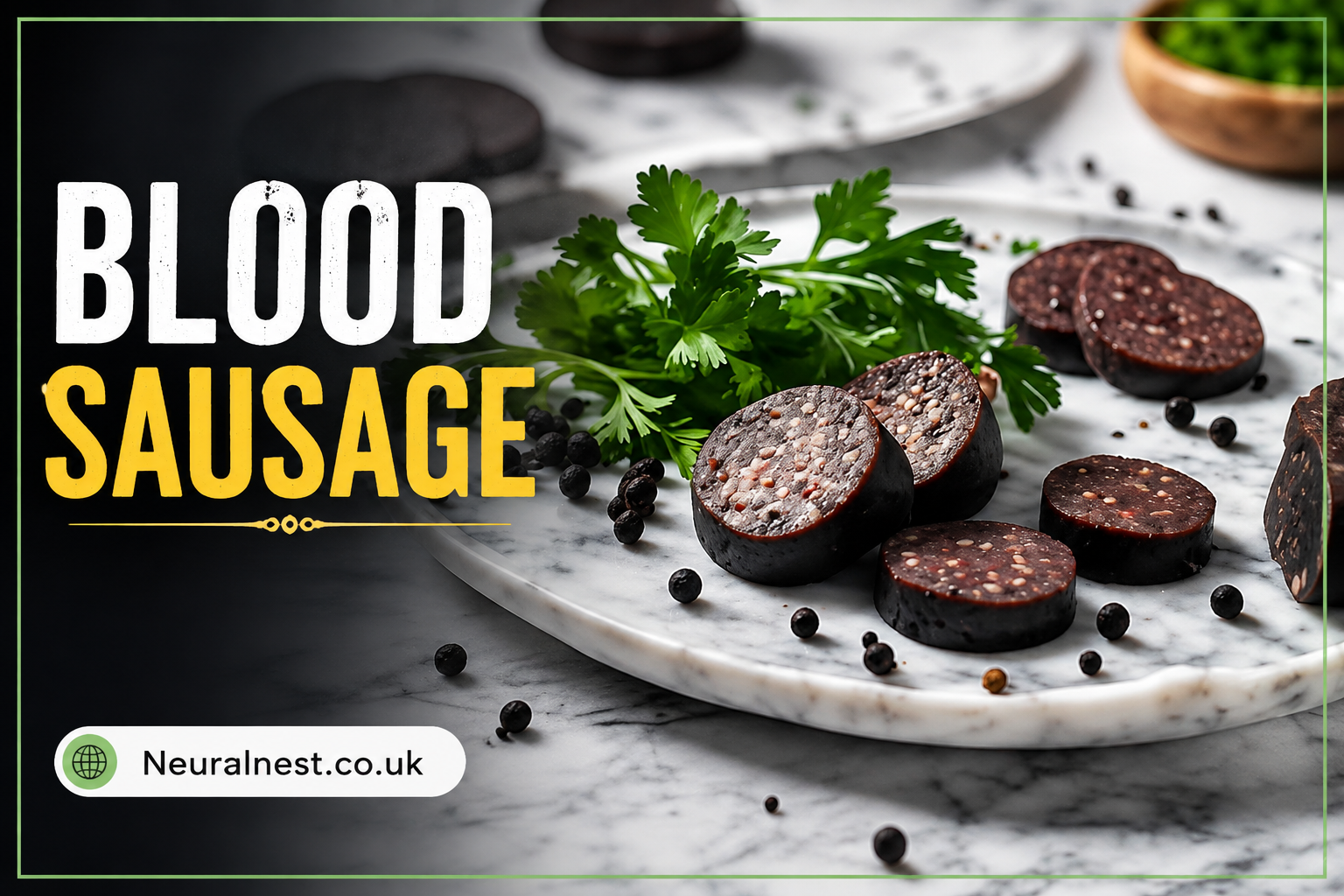
Blood sausage’s is a type of sausage made primarily from animal blood (usually pork, though beef, lamb, or duck blood is also used), combined with fat, a binding grain or filler, and seasonings, then stuffed into a casing and cooked.
Featured snippet answer: Blood sausage is a sausage made by cooking animal blood with fat and a starch filler (such as rice, barley, oats, or noodles) inside a natural or synthetic casing. It has been made across nearly every culinary tradition on Earth for over 2,000 years. & more blogs to see fresh .
Core Ingredients and How It’s Made
Most blood sausage recipes share a similar structure:
- Fresh blood — collected during slaughter and stabilized to prevent premature clotting.
- A filler — rice, barley, oats, bread, or glass noodles, depending on the region.
- Fat — pork back fat is the most common.
- Aromatics — onions, garlic, and spices vary widely by culture.
- Casing — traditionally pig or beef intestine.
The blood acts as a natural binder, giving the sausage its signature dark color and dense, slightly iron-rich flavor.
Why Cultures Started Making Blood Sausage
Blood sausage isn’t a novelty food — it’s a survival food that became a delicacy. Nose-to-tail butchery meant nothing from a slaughtered animal went to waste, and blood was one of the most perishable parts. Cooking it into sausage preserved it and stretched protein further for families with limited resources. This is the same logic behind haggis, scrapple, and countless other “odd cuts” dishes that are now considered gourmet.
Blood Sausage Around the World
Korean Blood Sausage (Soondae)
Korean blood sausage’s, known as soondae (순대), is one of Korea’s most popular street foods. Unlike many Western versions, soondae is typically made with:
- Pig or cow intestine casing
- Pig’s blood
- Dangmyeon (Korean glass noodles made from sweet potato starch)
- Barley or rice
- Seasonings like garlic and ginger
Soondae is usually steamed, then sliced and served with a dip of salt and pepper, or as soondae-guk (a hearty soup) and soondae-bokkeum (a spicy stir-fry). It’s a staple at Korean markets, night food stalls, and even convenience stores. Because it leans on glass noodles rather than heavy grains, Korean soondae has a distinctly chewier, more translucent texture than European blood sausages.
Blood Sausage in Spanish Cuisine (Morcilla)
Blood sausage’s in Spanish cuisine is called morcilla. It’s a beloved tapas staple with regional variations:
- Morcilla de Burgos — made with rice, onion, and pork fat; the most internationally recognized version.
- Morcilla de Asturias — typically pairs with white beans in the classic dish fabada asturiana.
- Morcilla dulce (sweet morcilla) — found in parts of Andalusia, made with pine nuts, raisins, and sugar or honey.
Morcilla is usually pan-fried or grilled until the casing crisps, then served on toast, in stews, or as a tapa with a drizzle of honey — a sweet-savory pairing that surprises many first-time tasters.
Other Notable Varieties (Comparison Table)
| Country/Region | Name | Key Filler | Typical Prep |
|---|---|---|---|
| Korea | Soondae | Glass noodles, barley | Steamed, in soup or stir-fry |
| Spain | Morcilla | Rice or onion | Pan-fried, grilled |
| France | Boudin Noir | Onions, cream | Pan-fried, served with apples |
| UK/Ireland | Black Pudding | Oats or barley | Fried, breakfast dish |
| Germany | Blutwurst | Barley, pork | Sliced, sometimes smoked |
| Mexico | Moronga | Rice, mint, chili | Grilled or in tacos |
| Philippines | Dinuguan | Vinegar, pork offal | Simmered stew (technically a stew, not a sausage, but blood-based) |
Why Is Blood Sausage Illegal? Separating Myth From Fact
This is the question that brings most people here, so let’s answer it directly.
Blood sausage’s is not federally illegal in the United States. It is legal to make, sell, and eat. However, it is one of the most heavily regulated meat products because the USDA and FDA impose strict rules on how animal blood is collected, processed, and labeled — which makes some traditional recipes and imported versions difficult or impossible to sell commercially.
The Real US Regulations (USDA & FDA)
Two separate issues get conflated when people ask “why is blood sausage illegal”:
- Blood collection standards. Commercial blood sausage must use blood collected under continuous USDA inspection at approved facilities. This rules out a lot of small-scale or “farmhouse” production methods still used in Europe.
- The lung ban. Since the 1970s, US federal regulation has prohibited livestock lungs from being used as human food, based on concerns that fluids could enter the lungs during slaughter and spread pathogens. Several traditional European blood sausage and haggis recipes historically included lung, which is why those specific imported products are blocked — not because of the blood itself.
Why Some Products Can’t Be Imported
Products like authentic British black pudding or Scottish haggis sometimes run into import restrictions, but the sausage or dish itself isn’t outlawed. The blockage usually comes down to:
- Lung content (banned as an ingredient)
- Blood sourced without USDA-equivalent inspection documentation
- FDA pre-approval requirements for any blood-containing imported food product
Meanwhile, morcilla, soondae, blutwurst, boudin noir, and other blood sausages are sold openly in specialty grocery stores, Korean markets, and Latin American butcher shops across the US — because they’re produced or imported through compliant channels.
Is It Legal to Make Blood Sausage at Home?
Yes. Making blood sausage’s for personal, non-commercial consumption is generally legal in the US, provided you follow basic food safety practices for handling raw blood (keeping it refrigerated, using it promptly, and cooking it to a safe internal temperature). Selling it commercially is where the strict inspection rules kick in.
Pros and Cons of Eating Blood Sausage
| Pros | Cons |
|---|---|
| High in iron, protein, and B vitamins | High in cholesterol and sodium |
| Reduces food waste (nose-to-tail eating) | Texture and flavor are polarizing for newcomers |
| Deeply rooted in global culinary tradition | Requires careful sourcing and cooking to be food-safe |
| Widely available in ethnic and specialty markets | Some imported varieties are restricted |
Mistakes to Avoid When Buying or Cooking Blood Sausage
- Buying from unverified sources. Only purchase from licensed butchers, grocers, or USDA-inspected importers.
- Undercooking it. Blood sausage should reach a safe internal temperature (typically 160°F/71°C) before eating.
- Assuming all varieties taste the same. Korean soondae, Spanish morcilla, and French boudin noir have very different textures and flavor profiles — don’t judge the category from one bad experience.
- Ignoring storage guidelines. Fresh blood sausage’s is highly perishable and should be refrigerated and used within a few days, or frozen.
- Confusing “hard to find” with “illegal.” As shown above, scarcity in the US is usually about regulation and demand, not an outright ban.
Why This Matters
Understanding the real story behind blood sausage’s matters beyond trivia. Food myths like “blood sausage’s is banned in America” spread misinformation about entire cultures’ culinary traditions, discourage people from trying foods that are nutritious and historically significant, and distract from the actual, more nuanced conversation about food safety regulation. For home cooks, travelers, and anyone building a more adventurous palate, knowing the difference between “regulated” and “illegal” changes how confidently you can explore global cuisine — whether that’s ordering soondae-guk in Koreatown or picking up morcilla at a Spanish market.
Expert Recommendations
- Start with a familiar preparation. If you’re new to blood sausage, try Korean soondae-bokkeum (stir-fried with vegetables and gochujang) — the spice and texture make it approachable.
- Pair it thoughtfully. Morcilla’s iron-rich flavor pairs beautifully with something sweet or acidic — apples, honey, or a squeeze of citrus balance the richness.
- Buy from reputable sources. Look for USDA-inspected labels or established ethnic grocers rather than informal or unregulated sellers.
- Reheat gently. Because it’s already cooked, blood sausage only needs to be warmed through — high heat can cause the casing to split and the filling to dry out.
- Ask your butcher. A good butcher can tell you exactly how the blood was sourced and whether the product meets USDA standards, which matters most if you have any immune sensitivity.
Conclusion
Blood sausage isn’t the mysterious, semi-forbidden food its reputation suggests. It’s a global tradition spanning millennia — from Korean soondae steamed and sliced for street food stalls, to Spanish morcilla crisped in a pan and served with honey, to the boudin noir, blutwurst, and black pudding variations found across Europe. And no, it isn’t illegal in the US: it’s simply one of the most tightly regulated foods on the market, thanks to USDA blood-sourcing rules and a decades-old restriction on using lung as a food ingredient.
Once you separate the regulation from the rumor, blood sausage becomes what it’s always been — a resourceful, flavorful dish worth trying with an open mind and a reputable butcher.
Ready to taste it for yourself. Look for soondae at your nearest Korean market or morcilla at a Spanish grocer, and start with a preparation that eases you in, like soondae-bokkeum or pan-fried morcilla with apples.
FAQs
What does blood sausage taste like?
Blood sausage’s has a rich, mildly metallic, savory flavor from the blood, balanced by the fat and filler (rice, oats, or noodles). Texture ranges from soft and creamy (French boudin noir) to firm and chewy (Korean soondae).
Is Korean blood sausage the same as Spanish blood sausage?
No. Korean blood sausage’s (soondae) typically uses glass noodles and barley in a pig intestine casing, while Spanish blood sausage (morcilla) usually uses rice or onion and is pan-fried or grilled. They share the blood base but differ significantly in filler, texture, and preparation.
Why is blood sausage illegal in the US?
Blood sausage’s is not illegal in the US. It is heavily regulated: commercial blood must come from USDA-inspected sources, and lung — an ingredient in some traditional European recipes — has been banned as a human food ingredient since the 1970s, which restricts specific imported products, not blood sausage as a category.
Can you bring blood sausage into the US from another country?
Generally, no, for fresh or uncooked blood sausage’s carried in personal luggage. The USDA allows commercially canned or shelf-stable, sealed blood sausage products in limited cases, but fresh versions are typically not permitted through customs.
Is blood sausage healthy?
In moderation, blood sausage’s offers meaningful amounts of iron, zinc, protein, and B vitamins. However, it’s also high in saturated fat, cholesterol, and sodium, so it’s best enjoyed as an occasional dish rather than a daily staple.
What is blood sausage called in Spanish?
Blood sausage in Spanish is called morcilla. Regional versions include morcilla de Burgos (with rice) and morcilla de Asturias (paired with beans in fabada).
Where can I buy blood sausage in the US?
Korean markets typically carry soondae, Latin American and Spanish grocers carry morcilla or moronga, and German or Eastern European delis often stock blutwurst. Specialty butcher shops in larger cities also carry regional varieties.
In Short
- Blood sausage is a global dish made from animal blood, fat, and a starch filler, dating back over 2,000 years.
- Korean blood sausage (soondae) uses glass noodles and barley; Spanish blood sausage (morcilla) uses rice or onion — different textures, same concept.
- Blood sausage is not illegal in the US; it’s tightly regulated due to blood-sourcing rules and a decades-old ban on using animal lungs as food.
- Fresh, homemade, or uninspected imported versions face the most restrictions — commercially produced varieties are widely and legally available.
- Buying from reputable, USDA-compliant sources and cooking it properly is the safest way to enjoy it.