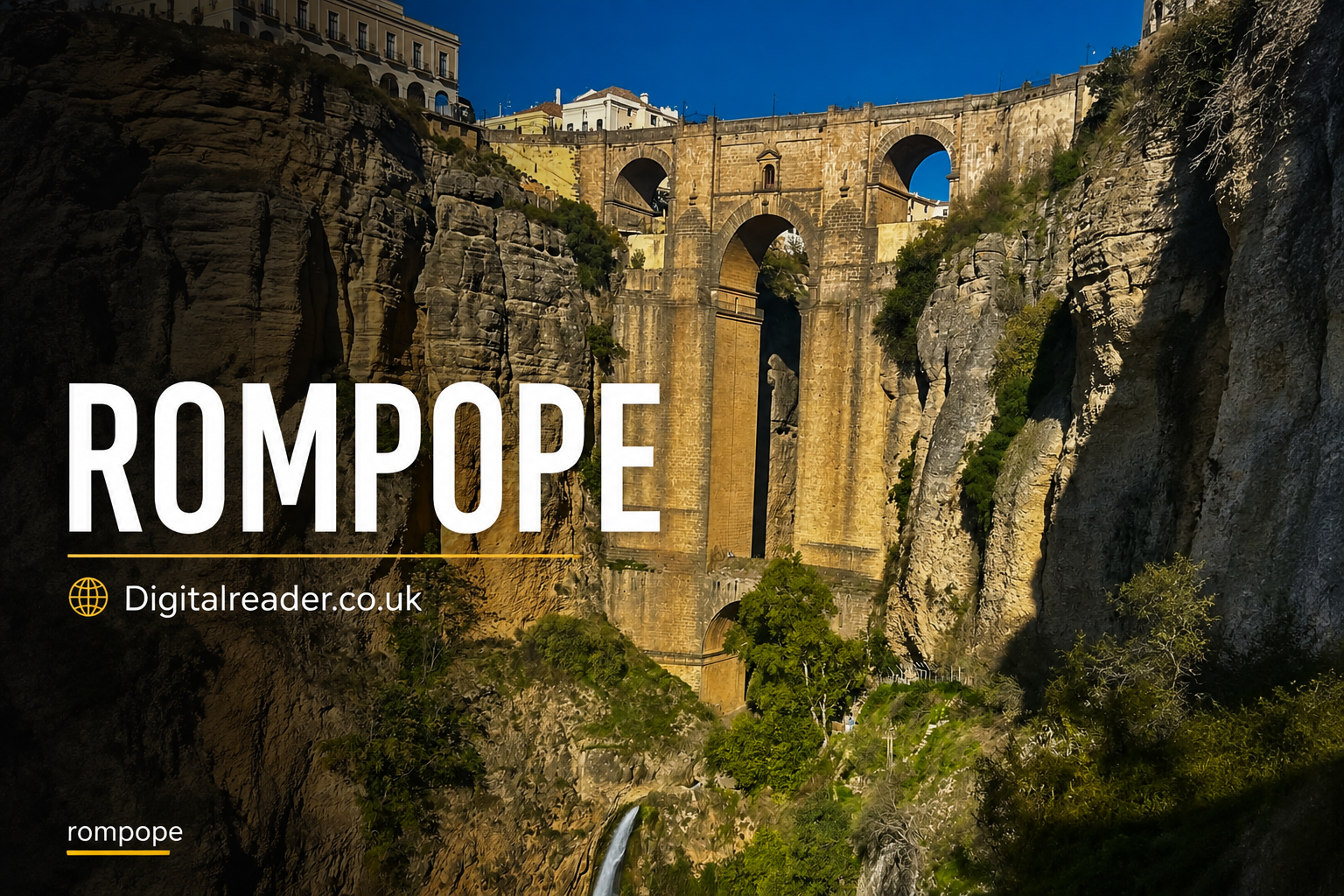

Picture a town split clean in half by a 300-foot gorge, held together by a single stone bridge — and no, it’s not a movie set. It’s real, it’s in southern Spain, and it’s called Ronda.
If you’re planning a trip to Andalusia, you’ve probably seen the photos: whitewashed buildings perched on the edge of a cliff, a bridge that seems to float above nothing. But most guides either drown you in history you don’t need yet, or skip the practical basics — like where Ronda, Spain actually is, how long you need there, and whether it’s worth the detour from Seville or Málaga.
This guide answers all of it. You’ll get Ronda’s exact location, a breakdown of its Old Town, the best things to do, common mistakes first-time visitors make, and everything you need to plan a trip that actually matches how much time you have.
Where Is Ronda Spain?
Ronda is a town in the province of Málaga, in the Andalusia region of southern Spain, sitting roughly 60 kilometers (about 37 miles) north of Marbella and 100 kilometers (about 62 miles) from the city of Málaga. It’s built dramatically atop a mountain plateau, split in two by the deep El Tajo gorge.
Ronda, Spain is located in the province of Málaga in Andalusia, southern Spain, about 100 km from Málaga city and roughly 60 km north of Marbella. It sits on a mountaintop, divided by the El Tajo gorge.
Because of its elevated, mountainous setting in the Serranía de Ronda, the town feels far more remote than the drive suggests — which is exactly what gives it that “city in the sky” reputation. & more blogs fresh .
How to Get to Ronda Spain
Most travelers reach Ronda one of three ways:
- By car — roughly 1.5–2 hours from Málaga, Marbella, or Seville, making it a popular day trip or scenic road-trip stop.
- By train — Ronda has direct rail connections from Málaga and Algeciras, with scenic routes through the mountains.
- By guided day tour — many tours combine Ronda with nearby white villages (pueblos blancos) or Seville, useful if you don’t want to drive mountain roads.
If you’re based on the Costa del Sol, Ronda works well as a full-day trip. If you’re coming from Seville, it’s a longer but manageable day, especially by car.
A Brief History of Ronda
Ronda’s Old Town reflects centuries of overlapping rule — Roman, Moorish, and Christian — visible in its layered architecture, churches, and defensive walls. Under Moorish control, Ronda became an important cultural and military center, and much of the Old Town, known as La Ciudad, still dates from that era.
The town also holds a significant place in Spanish tradition as the birthplace of modern bullfighting, home to one of the oldest bullrings in the country. Its dramatic setting later attracted literary attention, most famously from Ernest Hemingway, who referenced Ronda in his writing about the Spanish Civil War and bullfighting culture — a connection that still shapes how the town markets itself to visitors today.
Exploring Ronda Spain’s Old Town
La Ciudad vs. El Mercadillo
The El Tajo gorge doesn’t just split Ronda visually — it splits it historically and functionally into two distinct neighborhoods:
- La Ciudad — the original Moorish old town, south of the bridge, centered around Calle Armiñán. This is where you’ll find the oldest architecture, quieter streets, and the best sunset atmosphere.
- El Mercadillo — the newer, more commercial side, home to most restaurants, shops, and the bullring.
Understanding this split matters practically: if you only have a few hours, prioritize La Ciudad for atmosphere and El Mercadillo for food and amenities.
Must-See Sights in the Old Town
- Plaza de España — Ronda’s main square, overlooked by the old town hall (now a parador hotel)
- Casa del Rey Moro — historic house and gardens with dramatic gorge-side terraces
- Puente Viejo (Old Bridge) and the 12th-century Puente Árabe (Arab Bridge)
- Baños Árabes (Arab Baths) — well-preserved Moorish-era bathhouse
- Iglesia de Santa María la Mayor — a church built over a former mosque
- Puerta de Almocábar — a 13th-century gate in the old defensive walls
The Puente Nuevo: Ronda’s Most Iconic Landmark
No discussion of Ronda is complete without the Puente Nuevo, or “New Bridge” — despite its name, it’s the newest of Ronda’s three historic bridges, not a modern structure.
Construction began in the 1750s, and the bridge took 42 years to build, designed by architect José Martín de Aldehuela and led by chief builder Juan Antonio Díaz Machuca.It was completed in 1793 and named “New” simply because it postdates the older Puente Viejo.At nearly 100 meters — about 328 feet — tall, it ranks among the highest bridges in Andalusia.
Voice search answer: How tall is the Puente Nuevo bridge in Ronda? It stands almost 100 meters (about 328 feet) above the floor of the El Tajo gorge.
A small chamber inside the bridge, once used as a prison, is now open to visitors as a modest exhibition space — one of the more overlooked things to do in Ronda’s Old Town for travelers who want more than photos.
Best Things to Do in Ronda, Spain
Top Attractions
- Walk across (and inside) the Puente Nuevo
- Visit the Plaza de Toros de Ronda — one of Spain’s oldest bullrings, with an on-site museum
- Explore the Casa del Rey Moro gardens and staircase
- Wander La Ciudad’s old streets and city walls
- Relax at Alameda del Tajo Park, especially around sunset
- Hike down to the Puente Viejo and Puente Árabe for lower-angle views
- Visit the Arab Baths (Baños Árabes)
- See the Museo Lara, a quirky collection of historical artifacts
Best Viewpoints for Photos
| Viewpoint | Best For | Difficulty |
|---|---|---|
| Mirador de Aldehuela | Close-up bridge view, no climbing | Easy |
| Jardines de Cuenca | Classic wide-angle bridge shot | Easy |
| Camino del Desfiladero (gorge path) | Lower-angle, dramatic view | Moderate |
| Valley floor near the waterfall | Looking up at the full bridge height | Difficult (guided access recommended) |
Ronda vs. Other Andalusian Day Trips
If you’re deciding between Ronda and another popular Andalusian stop, here’s a quick comparison:
| Destination | Best For | Time Needed | Distance from Málaga |
|---|---|---|---|
| Ronda | Dramatic scenery, history, bullfighting heritage | 4–6 hours (day trip) or overnight | ~100 km |
| Seville | Grand architecture, flamenco culture | Full day or multi-day | ~200 km |
| Nerja | Beaches, caves | Half day | ~50 km |
| Granada (Alhambra) | Moorish palace architecture | Full day or overnight | ~130 km |
Pros of visiting Ronda:
- Extremely photogenic, unlike almost anywhere else in Spain
- Manageable as a day trip from multiple cities
- Rich, layered history in a compact walkable area
Cons of visiting Ronda:
- Can get very crowded midday with tour buses
- Steep streets and cliffside paths aren’t ideal for limited mobility
- Some viewpoints require a moderate hike
Why This Matters
Ronda isn’t just another stop on an Andalusia itinerary — it’s often the single most photographed, most talked-about town travelers encounter in southern Spain, which means expectations run high. Knowing exactly where Ronda is, how it’s laid out, and which sights matter most helps you avoid the two most common trip-planning mistakes: underestimating travel time from the coast, and spending your limited hours only at the bridge instead of exploring the Old Town that gives Ronda its character.
For travelers building a broader Spain itinerary, understanding how Ronda fits geographically — between the Costa del Sol and Seville — also helps you sequence stops efficiently instead of backtracking across the region.
Expert Recommendations
Mistakes to Avoid When Visiting Ronda
- Arriving only at midday. Tour buses cluster around lunchtime; early morning or late afternoon means far fewer crowds at the Puente Nuevo.
- Only photographing the bridge from one angle. Most first-timers miss the Mirador de Aldehuela or the gorge-floor viewpoints, which give a completely different perspective.
- Wearing the wrong shoes. Ronda’s Old Town has uneven cobblestones and steep inclines — comfortable, closed-toe shoes matter more here than in flatter Spanish cities.
- Skipping La Ciudad. Many visitors stay near the bridge and El Mercadillo and miss the quieter, more historic southern half of town.
- Underestimating driving time on mountain roads. Google Maps estimates can run optimistic on the winding roads leading into Ronda — build in extra time.
Expert Tips for a Better Trip
- Visit the bridge at both sunrise/morning and sunset for dramatically different lighting.
- Book bullring tickets in advance during peak season (spring and early fall).
- Pair Ronda with a nearby white village (like Setenil de las Bodegas) if you have a full day and a car.
- If short on time, prioritize the Puente Nuevo, Plaza de España, and one gorge-side viewpoint over trying to see everything.
- Carry cash for small cafés and the secret Carmelite convent bakery, which are often cash-only.
Conclusion
Ronda, Spain earns its reputation as one of Andalusia’s most unforgettable towns — not just for the Puente Nuevo bridge, but for the layered history, quiet Old Town streets, and dramatic gorge views that reward travelers who go beyond a quick photo stop. Now that you know exactly where Ronda is, how it’s laid out, and which sights matter most, you’re ready to plan a visit that fits your time and interests.
FAQs
Where is Ronda, Spain located?
Ronda is located in the province of Málaga, in Andalusia, southern Spain, roughly 100 km from Málaga city, built atop a mountain plateau split by the El Tajo gorge.
How far is Ronda from Seville?
Ronda is approximately 120 km (about 75 miles) from Seville, roughly a 1.5 to 2-hour drive.
Is Ronda, Spain worth visiting?
Yes — Ronda is considered one of Andalusia’s most visually dramatic towns, known for the Puente Nuevo bridge, a well-preserved Old Town, and Spain’s oldest bullring, making it a popular day trip from Málaga, Marbella, or Seville.
What is Ronda’s Old Town called?
Ronda’s historic Old Town is called La Ciudad, located south of the Puente Nuevo bridge, distinct from the newer, more commercial El Mercadillo district on the other side.
How long do you need in Ronda?
Most visitors spend 4–6 hours in Ronda as a day trip, though an overnight stay allows time to see the bridge at both sunrise and sunset without crowds.
Can you walk inside the Puente Nuevo bridge?
Yes, visitors can access a small chamber inside the bridge, once used as a prison, now open as a small exhibition space, accessible via a narrow staircase.
What is Ronda, Spain known for?
Ronda is best known for the Puente Nuevo bridge spanning the El Tajo gorge, its well-preserved Old Town, and its status as the birthplace of modern Spanish bullfighting.
In Short
- Ronda, Spain sits in Málaga province, Andalusia, about 100 km from Málaga city, split by the dramatic El Tajo gorge.
- The Puente Nuevo bridge, completed in 1793, is Ronda’s most iconic landmark and a highlight of any visit.
- Ronda’s Old Town, La Ciudad, holds most of the historic Moorish-era architecture and is distinct from the newer El Mercadillo district.
- A day trip typically takes 4–6 hours, though an overnight stay lets you experience the bridge without midday crowds.
- Beyond the bridge, top things to do include the Plaza de Toros, Casa del Rey Moro, and multiple cliffside viewpoints.